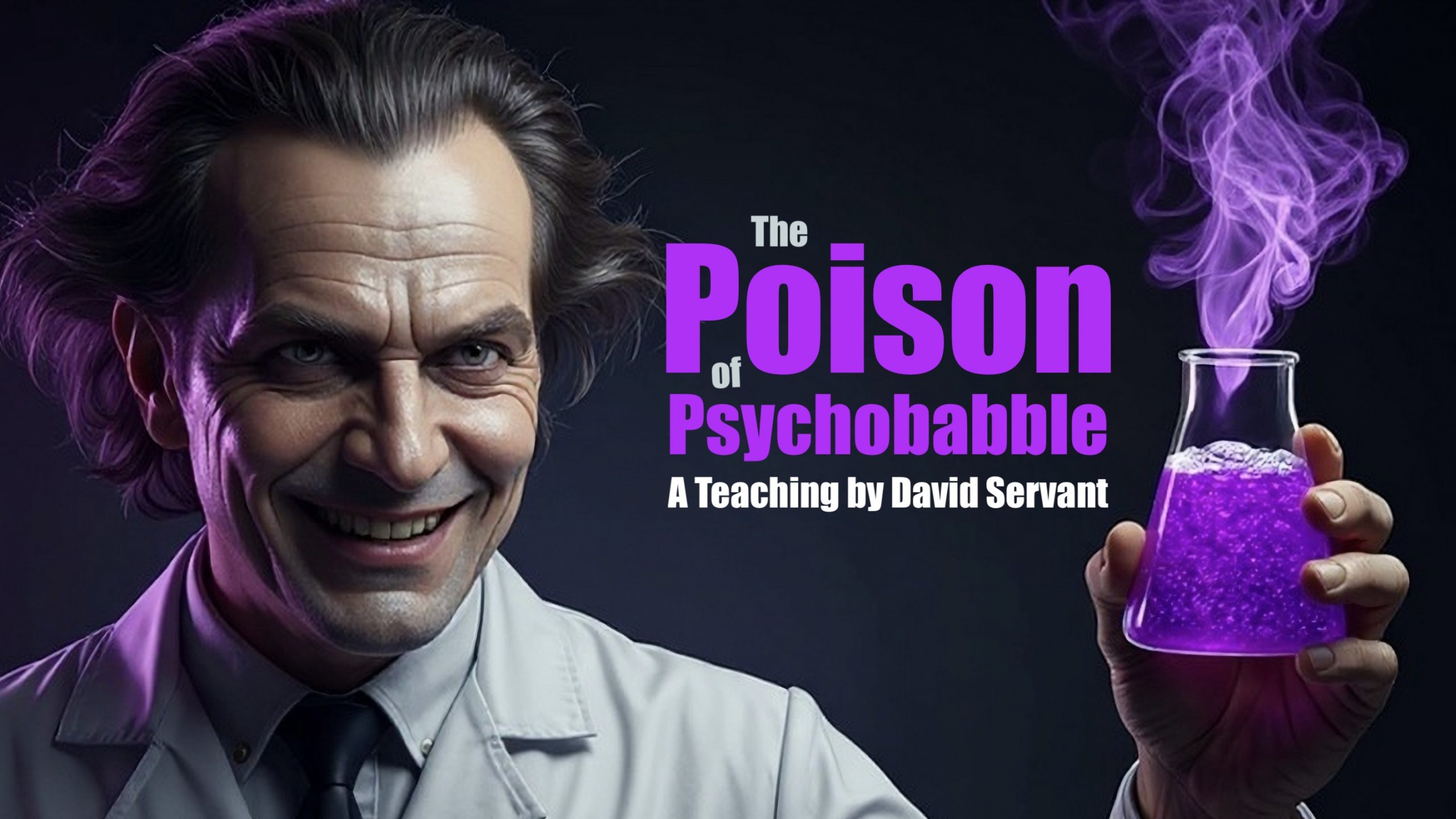
The term “psychobabble”—found in the Oxford English Dictionary since 1984—was coined by a psychiatrist and writer named Richard Dean Rosen in his 1977 bestselling book titled, Psychobabble: Fast Talk and Quick Cure in the Era of Feeling.” It is a derogatory term for language that uses academic psychological terminology in a superficial, misleading, exaggerated, or meaningless way. It often sounds impressive and authoritative, but it lacks real substance, precision, or therapeutic value.
The word “psychobabble” is typically used to criticize pop psychology, self-help clichés, overly-simplistic explanations of complex human behavior, or the misuse of technical psychological terms by non-experts. Psychobabble has flooded social media, and it is the verbiage of TikTok therapists and Facebook life coaches. Pop “psychologists” use some of the same terms used by academic psychologists, but they pervert their meaning, misleading those who listen to them. Worse, some psychobabble has infiltrated even the ranks of clinical psychologists who employ therapeutic techniques that lack empirical support.[1]
For that reason, psychobabble and its related pop psychology fallacies can be poisonous to those who partake. You may be surprised to discover that you have been unwittingly using some form of psychobabble in your own vocabulary, or have embraced some of pop psychology’s many myths. In this brief article, I want to point out some of the most common psychobabble phrases.
1.) “She’s a narcissist.” Within the field of academic psychology, narcissism is a rare personality disorder that requires an in-depth assessment for diagnosis using nine criteria. The clinical narcissist must be consistently (not temporarily) characterized by at least five of these nine: He has (1) a grandiose sense of self-importance, (2) a preoccupation with fantasies of unlimited success, power, brilliance, beauty, or ideal love, (3) a belief that he or she is “special” and unique, (4) a need for excessive admiration, (5) a sense of entitlement, and he (6) is interpersonally exploitative, (7) lacks empathy, (8) is often envious of others, (9) and shows arrogant, haughty behaviors or attitudes. (Of course, all of those criteria have been arbitrarily chosen to define the arbitrarily-chosen term, narcissism.)
In any case, just because someone is selfish or self-obsessed on some level doesn’t mean he is a narcissist. Calling someone who is selfish a narcissist is unfair and can even be cruel. If everyone who is selfish at times is a narcissist, then we’re all narcissists. So let’s eliminate the term from our vocabulary unless we are accredited psychologists. And let’s ignore all the “narcissist checklists” on TikTok, Reddit, Instagram and Facebook.
There are, by the way, scores of YouTube psychologists, both credentialed and self-anointed, who make a living by talking about nothing other than narcissism and its subtypes (such as “overt” and “covert” narcissism). It has become a growing industry. Everyone wants to label the person who hurt them a “narcissist “so they can lay all the blame for their broken relationship on the other person. When you’ve had the bad luck of marrying seven narcissists in a row, it might be time to look in the mirror…
2.) “He’s gaslighting me!” The term “gaslighting” comes directly from the 1938 British stage play titled Gas Light and its two 1940s film adaptations. The plot revolves around a manipulative husband who secretly dims and brightens the gas-powered lights in his house while repeatedly denying to his wife that the lights are changing brightness. He does other similar things in an attempt to convince relatives that his wife is going insane in order to have her committed to an institution so he can steal her inheritance.
Psychologists eventually began using the term to describe a form of psychological manipulation in which, over an extended period of time, a person with evil intent deliberately makes someone question their own reality, memory, or perceptions, with the intent of gaining power or control over them.
“Gaslighting” is not disagreeing with someone’s viewpoint in an argument. It is not challenging someone’s perception. It is not disagreeing with someone’s memory. It is not saying, “I never said that” about something minor or misremembered.
The gaslighting person hides your car keys every day and insists that you are losing your mind. Or he repeatedly tells you that all your friends hate you when he knows that is not actually true in an attempt to manipulate you for his selfish ends. Or he denies that he sent the hostile texts that you show him on your phone and claims they are forgeries and you are delusional. Gaslighting is a serious, patterned form of abuse. But in modern culture, it is one of the most overused terms of psychobabble, applied to almost any disagreement, lie, of difference of recollection.
3.) “You are dismissing my feelings!” or, “You are invalidating my feelings!” Within academic psychology, “emotional invalidation” occurs when someone repeatedly belittles or worse, mocks, another person’s emotions, conveying to them that their emotions are stupid or wrong.
A simple, single example of emotional invalidation would be telling someone who is grieving the loss of a loved one, “Get over it! It’s been two weeks already!” That is thoughtless, but it still does not qualify to be labeled as “emotional invalidation” unless it is a pattern.
Telling a child, “Stop crying, or I’m going to spank you again!” is certainly emotional invalidation and abusive, especially if it is a pattern.
If you believe many of the internet “life coaches,” however, you will start to believe that emotional invalidation occurs with any response that does not immediately and fully affirm your feelings or viewpoint. There is no room for disagreement, facts, alternative perspectives, or sincere challenges from others. And anyone who innocently says, “You shouldn’t feel that way!” becomes the emotion-invalidating enemy. That then becomes the excuse to “find a safe place” (next on our list) which is psychobabble for, “I only keep friends who affirm everything I feel and think.” Those kinds of folks eventually find themselves living very lonely lives.
People who say to others, “You are dismissing my feelings” are making an accusation. Whether the accusation is true or not, it will generally be perceived as an attack and met with resistance. Better to first evaluate if the person whom you are accusing is actually belittling or mocking your emotions. If they are, then better to gently say, “I know you genuinely care about how I feel, but you’re giving me some reason to question that.” That gentle response will elicit an entirely different response than, “You are dismissing my feelings,” which is relational poison.
4.) “I don’t feel safe around you, so for my own self-protection, I need to move to a safe place.” That statement is not psychobabble when there is a realistic threat of physical or serious emotional harm. For example, if someone is threatening you with violence, stalking you, sexually coercing you, inappropriately touching you, and so on, your brain should register genuine danger. You should find a safe place and call the authorities.
However, this is classic psychobabble when it is spoken to someone who disagrees with you, expresses a different opinion, or even criticizes you, makes you feel embarrassed, guilty or emotionally uncomfortable. It is a relationally-poisonous insult to convey to such a person that they are dangerous and thus deserve to be completely shunned. They might be thoughtless, rude or annoying, but they are not dangerous. And the person who uses this kind of psychobabble in dealing with people who disagrees with them or holds to a different opinion only reveals their insecurity and immaturity.
5.) “She is emotionally abusive!” That phrase is the current champion in the psychobabble hall of fame. In academic psychology (as well as in domestic-violence shelters and courts), emotional abuse is defined as repeated, patterned behavior that destroys someone’s self-worth, such as constant belittling, name-calling, humiliation, threats, isolation from friends and family, controlling someone else’s money or where-abouts, and deliberate silent treatment for days as a punishment.
Someone criticizing you once or twice, or who raises their voice against you during a single argument, or who says something hurtful in the heat of the moment, is not emotionally abusing you. If you simply don’t like a person’s tone, personality, or communication style (for example, if they’re blunt, sarcastic or dry), that is not emotional abuse.
On TikTok and Reddit, however, posters get thousands of “likes” when they publicly accuse others of emotional abuse for what amounts to typical human behavior. “My boyfriend rolled his eyes as I was talking to him” or, “My mother asked, ‘Why are you still single?’” “I suffered emotionally-abusive silent treatment when my friend didn’t text me back for 12 hours!” That is all just weaponized psychobabble. It, like most other psychobabble, is relational poison.
6.) “I’ve suffered trauma because of what you did.” Within academic psychology, trauma is defined as “Events of an extremely threatening or horrific nature, likely to cause pervasive distress in almost anyone.” It is also defined as “Actual or threatened death, serious injury, or sexual violence, examples being military combat, rape, childhood sexual abuse, natural disasters, severe accidents, and witnessing violent death.” Some clinicians make a distinction between “Big T” and “Little t” trauma, the latter of which they define as highly-stressful life events that do not meet the classic definition of trauma, such as divorce, job loss, bullying or infidelity. Still, “Little t” trauma is not found as a classification in psychology diagnostic manuals. The reason is because it redefines actual trauma and its consequences.
People who have suffered actual trauma have overwhelmed their nervous system’s ability to cope. They are often triggered by reminders of the actual traumatizing event, and can suffer from nightmares, flashbacks and hypervigilance. I’m sure you’ve heard of Post-Traumatic Stress Disorder (PTSD). It’s real, and I know people who have suffered with it. Trauma isn’t a feeling. It’s an event, or series of events.
In the world of pop psychology, however, trauma is almost anything that feels bad or overwhelming, such as a break-up, being cheated on, a harsh criticism, failing an exam, an argument with a parent, micro-aggressions, “bad vibes,” or seeing upsetting news. Being traumatized is equivalent to feeling anxious, sad, upset or angry. TikTok therapists tell us that we’ve all been traumatized, and that “trauma is stored in the body” (whatever that means). So we all need therapy, and for just $99, we can download their course and start healing. They tell us that, if we were born to Boomer parents (born between 1946 and 1964), we are likely to be suffering from “generational trauma.” That is, our parents suffered trauma, and that negatively affected how they raised us.
It’s all just psychobabble. And when we accuse someone of “traumatizing” us for some mistreatment, real or perceived, it is relational poison.
Again, the difference between academic psychology’s (evidence-based) and pop psychology’s (pseudoscientific) definitions of trauma can be summed up as follows: Academic psychology asks, “Did someone realistically think they (or someone else) might die or be sexually violated? Then they may have suffered trauma.” Pop psychology asks, “Did it upset or hurt your feelings? Then you are suffering from trauma” (and you need therapy).
7.) “You have forced me to set boundaries.”
“Boundaries” is one of the most overused and distorted terms on the internet, and it regularly appears on “top psychobabble” lists alongside terms like “toxic” and “gaslighting.” It is the foundation for the current trend of “going no contact” with family members who are labeled as “toxic.” In academic psychology, however, setting boundaries is simply communicating clear, consistent, reasonable, justifiable limits on patterned abusive behaviors you will not accept from others, and what consequences will follow if the limit is crossed (just like God does). Boundaries can protect the time, energy, and emotional well-being of the person who sets them.
Obviously, boundaries that are set for specific individuals are only needed for individuals who are consistently abusive. For that reason, followers of Christ should have no need to set up any boundaries among themselves, as they are supposed to be respecting the boundaries God has set up in His Word. I am happy to report that my wife has not set up any boundaries in our 46-year relationship because she has not seen any need for them. If I was a derelict husband, however, she might say to me, “David, if you come home drunk one more time, I’m going to move out for a month, and you will have to take care of yourself.” And that would be a good boundary for her to establish, as it would help hold me accountable for my abusive behavior and incentivize me to change. By not setting such a boundary, she would actually be helping to enable my abusive behavior.
In pop psychology, setting boundaries is often reduced to communicating personal preferences as non-negotiable rules that others must obey, or they will be labeled as “toxic.” Such boundaries are used to manipulate, control or punish others. Like so much of what is being twisted in pop psychology, setting boundaries becomes a justification for what is actually pure selfishness. When someone says, “I have a boundary against anything that doesn’t affirm me” that is selfish and controlling. Weaponizing boundaries has become a common justification to end conversations, to “go no contact,” or to demand one-sided accommodations while framing any pushback as “abuse.”
When there is a legitimate need to set boundaries, they should be flexible depending on context, relationship and new information. Within practitioners of pop psychology’s version, however, once boundaries are stated, they are treated as sacred, permanent, and non-negotiable. Changing or even discussing them is labeled as “boundary violation.” Those kinds of boundaries,” like just about everything else in the world of pop psychology, are relational poison.
In Conclusion
There are many other examples of psychobabble endlessly used by pop therapists, life coaches, social media influencers, and so on. If you hear any of these trendy buzz phrases, chances are you are hearing psychobabble: “Do the work,” “hold space,” “inner child healing,” “nervous system dysregulation,” “that’s my trauma speaking,” “sit with your feelings,” “you are mirroring my wounds,” “trauma-informed,” and “energetic boundaries.” All may have some remote basis in evidence-based psychology, but they are twisted and superficial. One theme they all seem to hold in common is also quite prevalent within academic psychology (which is also godless at its core): You are the victim. Someone else is to blame, and you are not responsible for your negative thinking patterns, behaviors, and broken relationships.
And how we love discovering that it is not our fault! It has been part of human nature ever since Adam said to God, “The woman whom You gave to be with me, she gave me from the tree, and I ate” (Gen. 3:12), and then Eve said to God, “The serpent deceived me, and I ate” (Gen. 3:13). But even though both original humans tried to place the blame on someone else, God didn’t buy their excuses. He held them accountable for their behavior. Welcome to reality.
Those Who Ignore History are Doomed to Repeat It
The ideas that are the foundation of modern psychology were only introduced to the world about 130 years ago by Sigmund Freud (a very perverse man, by the way). Pop psychology didn’t wait long to surface after that. By the 1910s, the press was already running headlines like, “What Your Dreams REALLY Mean,” “Are You in Love with Your Mother?,” “Every Man Has a Secret Wish to Kill His Father, says Freud,” and “Do You Have an Inferiority Complex? The New Disease That Explains Everything.” Since then, it has only gotten worse.
Oddly, the “Christian” world has fully embraced pop psychology as indicated by the many Christian self-help books that often blend out-of-context and twisted Scripture passages with psychobabble. Back in the 80s, for example, the raging fad of pop psychology was the “self-esteem” movement. The big problem with society, we were told then, was that people had a “low self-esteem.” They just didn’t love themselves enough. So, we needed to help everyone love themselves more. That would cure society’s ills. The self-esteem movement birthed school curricula, books, and policies promoting self-esteem as the answer to problems like crime and poor academic performance. It permeated education, parenting, and media, with participation trophies and “everyone’s a winner” approaches becoming the norm.
Before long, Christian publishers and pastors were jumping on the bandwagon, especially after they found some biblical support: “God commands us to love our neighbors as ourselves! So, we can’t love others like God wants us to until we first love ourselves! So we must work on loving ourselves!” It was an incredible twisting of Scripture and logic that sanctified selfishness. Up until then, most Christians understood that the second-greatest commandment was a call to repent of our existing selfishness—which everyone already has too much of—and start loving others like we already love ourselves.
The cultural dominance of the self-esteem movement peaked in the 1990s. By the early 2000s, the movement faced growing backlash for lacking empirical support. Studies actually showed that inflated self-esteem often led to selfishness, entitlement, and fragility rather than resilience and achievement. By the mid-2000s, the idea devolved into a punchline (and just in time for the next set of pop psychology fads).
What could people do for the thousands of years before the appearance of academic and pop psychology? Thankfully, they could look to God, the Maker of us all. His Word has provided us with an accurate psychological diagnosis and the remedy for all that is wrong with us. We are selfish sinners, and the cure is repentance and a living faith in the Lord Jesus Christ that results in us loving our neighbors as ourselves. And all the specifics on just how to do that are found in His Word. There we learn, for example, how to deal with inevitable conflicts that arise. We also learn that, in some cases, there are people with whom we should not associate at all. But the Bible’s instructions stand in stark contrast with the psychobabble of selfish pop psychology. Don’t fall for it!
[1] For proof, see House of Cards: Psychology and Psychotherapy Built on Myth, by Robyn M. Dawes, who served for many years as head of the Department of Social and Decision Sciences at Carnegie Mellon University.